
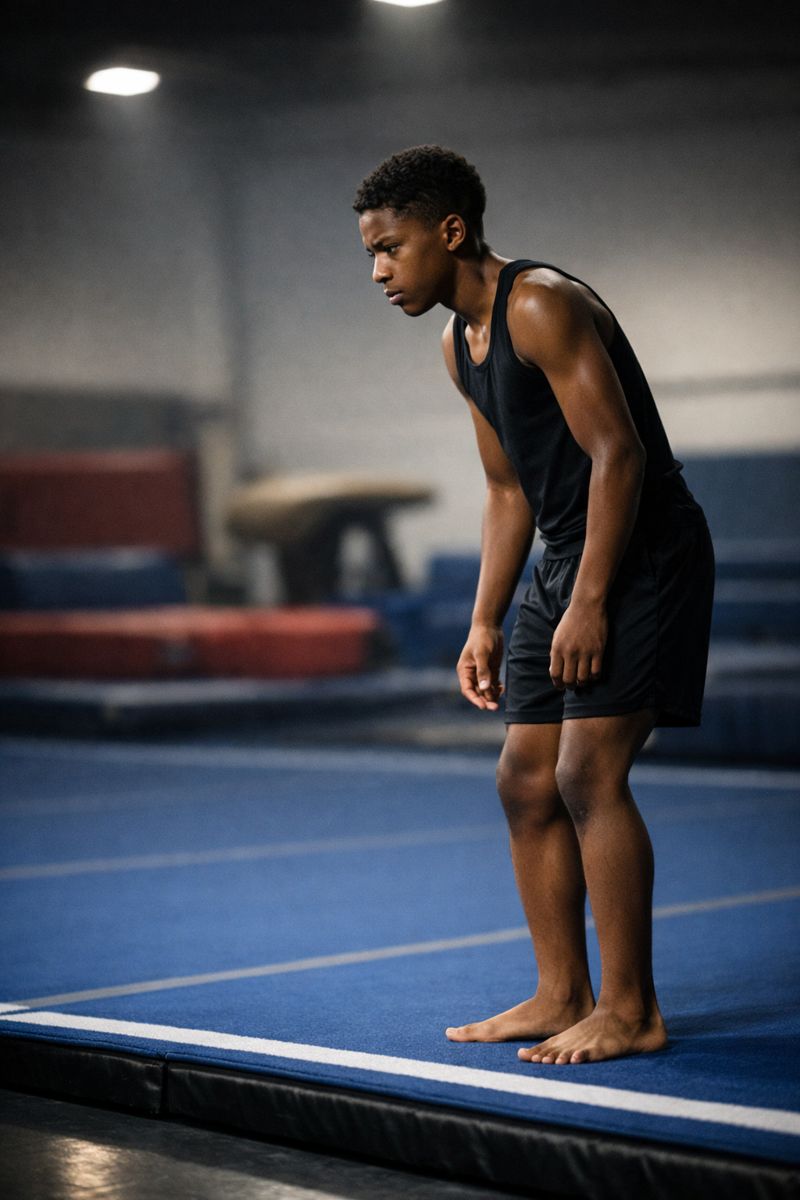
In tumbling and other acrobatic sports, athletes and coaches often overfocus on a single dimension such as technique or conditioning. Sustainable progress does not come from one pillar alone. High-level tumbling is built on three interconnected pillars that must grow together.
As the level rises, the demands on each pillar grow exponentially. At beginner stages, many skills feel easy and less threatening. At higher levels, however, the athlete often needs more strength, more technical clarity, and much stronger fear management.
Pillar 1: Physical Qualities
- Strength
- Power
- Speed
- Stability and joint control
- Flexibility
As difficulty increases, the athlete needs more physical readiness to express the skill safely. There are never enough physical qualities if the goal is continued improvement.
Pillar 2: Technical Control
- Timing and rhythm
- Spatial awareness
- Segment coordination
- Proper strength application
- Efficient use of momentum
Technical control lets the athlete apply physical abilities effectively. Poor technique wastes force, increases injury risk, and creates inconsistency, even in strong athletes.
Pillar 3: Mental Strength
- Confidence and self-efficacy
- Emotional regulation
- Fear management
- Patience during long learning phases
- Resilience after failure
High-level tumbling is not built on shortcuts. It is built on balance. No single pillar can carry performance alone.