
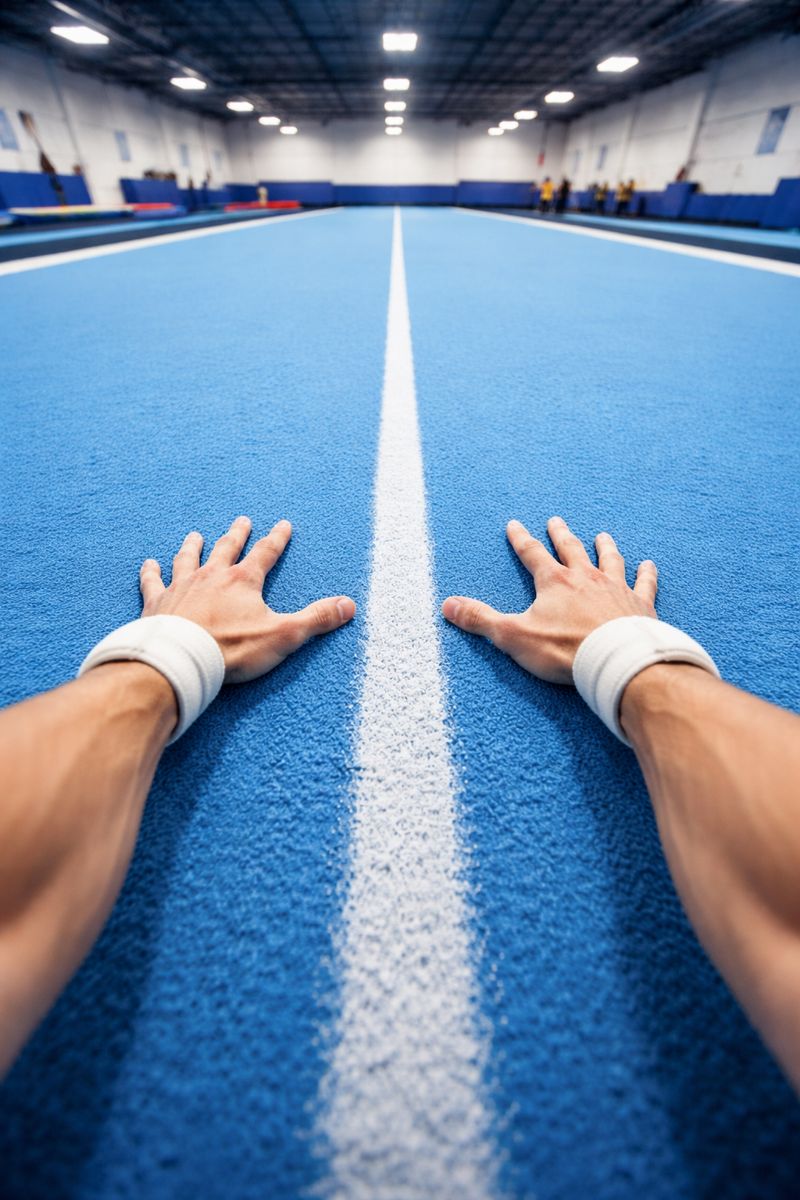
The back handspring is a cornerstone skill in gymnastics and many acrobatic disciplines. Beneath its fluid execution lies a biomechanical reality that every coach and athlete should understand: hand positioning significantly affects the load experienced by the elbow joint.
A recent study comparing inward, parallel, and outward hand positions found that outward and parallel placements can increase vertical and medio-lateral forces at the elbow. Repeated over thousands of training repetitions, those loads may increase the risk of chronic elbow issues.
Why does this happen? Outward and parallel positions tend to promote greater elbow flexion as a possible force absorption strategy. That can also reveal a vulnerability: if the athlete cannot resist that flexion under pressure, the joint absorbs more stress than it should.
Inward hand positions, often turned about 45 degrees inward, align more closely with classic blocking concepts where the arms stay firm and extended. That appears to distribute force more safely across the upper limb.
For coaches and athletes, this is not only academic. Technique selection should be evidence-based, especially for foundational skills. Hand position deserves review not just for aesthetics or habit, but for long-term joint health.
Technique is an expression of your physical abilities. Refine it wisely.